

DraftKings Says It Does Not Target Losing Bettors
DraftKings told members of Congress that it does not target customers showing signs of problem gambling through its VIP and rewards programs. The company also said in its response that it does not use artificial intelligence to identify bettors likely to lose.

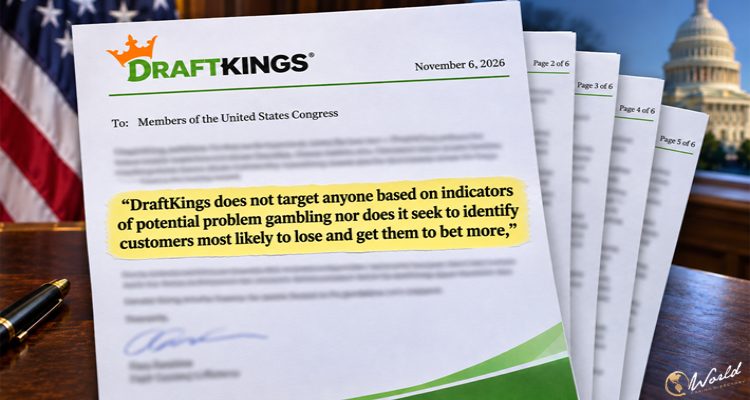
DraftKings told members of Congress that it does not target customers showing signs of problem gambling through its VIP and rewards programs, and that it does not identify bettors likely to lose in order to encourage them to place more bets. The company made these statements in a six-page response to a request dated October 22. The request was sent by Senator Richard Blumenthal and Representatives Paul Tonko and Valerie Foushee.
The response also addressed how VIP representatives communicate with customers and how technology is used in selecting promotions. It stated that promotions are not sent to customers who have self-excluded or are on a mandatory exclusion list. It was also reported that marketing communications are suspended during cooling-off periods and for a period after customers return.
VIP representatives are required to refer customers showing signs of a problem to the Responsible Engagement Team. Crisis cases are given priority. Each month, responsible gambling reviews are conducted for 10 randomly selected customers, and it was noted that representatives who do not complete these reviews could have their pay affected.
Customers in the Diamond and Onyx loyalty tiers make up less than 1 percent of all customers. The company argued that promotional decisions in these tiers are made by people, not automated systems. On personalized videos, the company said it does not use personalized content from athletes or celebrities as an incentive, and that it is aware of only one Cameo submission. On artificial intelligence, the company wrote that it does not use AI to identify customers likely to lose or those showing signs of a problem. It said it targets promotions based on customer preferences using data science and machine learning, and that this is not generative or agentic AI.



Comments (0)
Be the first to comment.
Log in to comment.