

Chile's Online Gambling Bill Faces Conflicting Ban Proposals
Chile's online gambling bill is caught between a regulated private market and proposals for a full ban. The second constitutional review in the Senate has hundreds of amendment proposals.

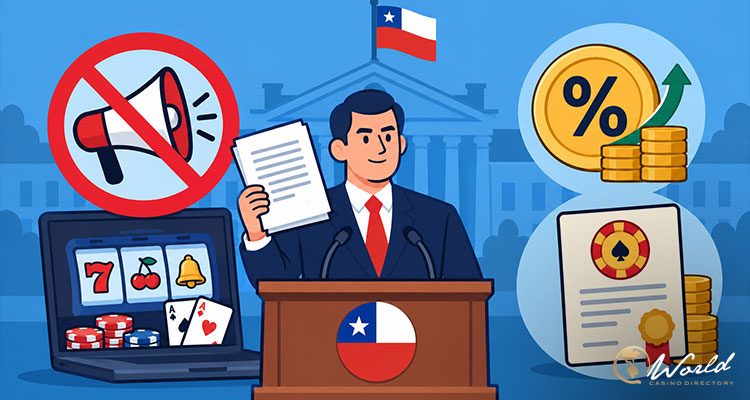
In Chile, the online gambling bill has entered a contested stage between the government's proposal to allow licensed private operators and calls from some senators for a complete ban. President José Antonio Kast's government submitted a 114-page package of amendments to Congress on October 26. The package includes five-year licenses for private operators, new taxes and player protection obligations.
Under the government's proposal, operators could obtain five-year valid licenses and would pay 1,000 monthly tax units each year. At today's exchange rate, this amount is roughly equivalent to 77 thousand dollars. The tax structure would apply 19 percent VAT to the difference between wagers and winnings, along with a separate 3 percent gambling tax.
The proposal would ban advertising and promotional bonuses. It would also introduce default limits on deposits and playing time. Companies that operated without a license the previous year would not be able to apply unless they reach a temporary arrangement with the authorities.
Industry representatives welcome the move toward regulation but object to the advertising restrictions. Sandra Kemp, president of the iGaming Responsible Association, said the legal gap creates risks for minors, adult users and the state, and that failing to legislate is the worst option.
According to a report in the newspaper Diario Financiero, Senators Diego Ibáñez and Gastón Saavedra have proposed a full ban on private online gambling in place of the licensing model.


Comments (0)
Be the first to comment.
Log in to comment.